Big Hole River
Flowing out of Skinner Lake near the Idaho border, the Big Hole River begins its 153-mile journey. It is known as one of the last blue-ribbon, freestone rivers in the lower 48. This river offers great diversity with rainbow trout, brown trout, cutthroat trout, brook trout, and Arctic grayling present. This variation in species gives anglers the chance at the Montana Grand Slam in a single day! This wild and scenic river offers much more than just trout; moose, elk, deer, mountain goats, bighorn sheep, and dozens of bird species are seen here daily. Steep canyon walls line many of its banks, offering breathtaking views while you embark on world-class fly fishing.

Sections & Hatches

Upper Big Hole
With one of the last intact wild Grayling and Cutthroat populations in the lower 48 states, the upper Big Hole offers anglers a special opportunity. Floating this section provides chances at these wild and native fish. Certain stretches of the river offer clients 360-degree views of the surrounding mountains while enjoying a highly productive float.
Canyon Section
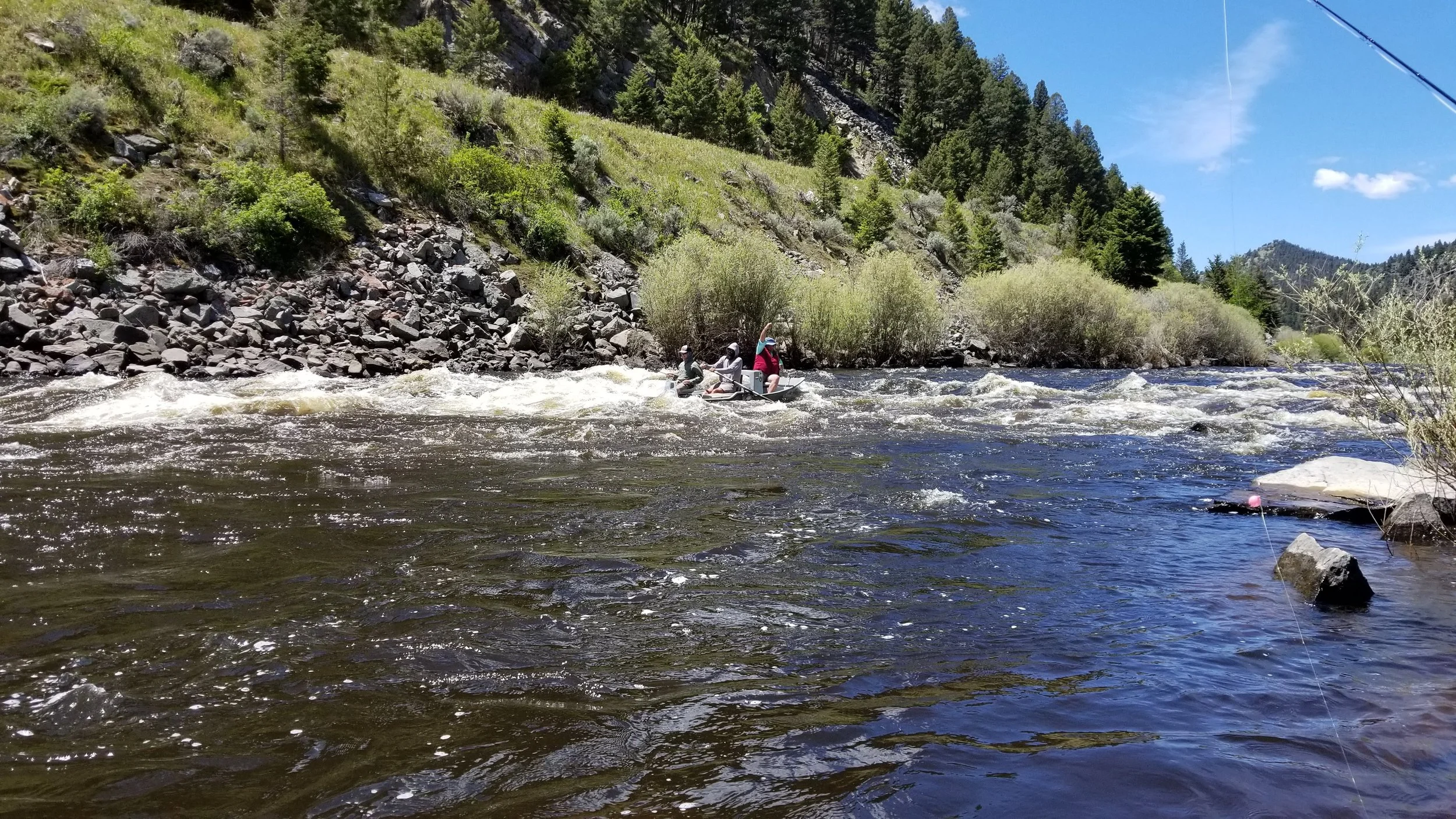
s the river enters the Dewey Canyon, the gradient and flows increase. This makes for sporty boating and action-packed fishing. Running through Class II and III rapids is not uncommon, and rafts are often the preferred vessel. This exciting stretch is a favorite among dry fly junkies looking to entice trout to the surface. The technical water requires anglers to make precise casts before the opportunity passes by.

Lower Big Hole
As the Big Hole flows towards the Jefferson River, it begins to slow down and braid. Cottonwood-lined islands dominate the landscape, opening up views of the Pioneer and Highland Mountain Ranges. These stretches typically hold numerous brown and rainbow trout, which can range from 12–20 inches. With ample amounts of stoneflies and terrestrial insects in the summer months, this lower stretch offers a variety of excellent options for anglers.

Hatches
Midges - March and April
Blue Winged Olive - April and May
Salmonfly & Golden Stonefly - Late June into Early July
Caddis - June, July & Augest
Terrestrials - Late Summer